
“We Just Want to Swim Safely”: Devon’s Sea Swimmers on Living with Sewage Discharge
In 2023, South West Water (SWW) released untreated sewage into England’s rivers and coastal waters more than 58,000 times, according to data compiled by Surfers Against Sewage (SAS). The discharges, often justified as storm overflows to prevent system overloads, have sparked growing public concern about water quality, transparency, and the long-term sustainability of the region’s wastewater infrastructure.
At dawn on a Saturday, a small group gathers on the sand at Dawlish Warren. The tide is high, the air sharp, and the swimmers, who call themselves the Aquaholics, walk calmly into the waves. For many, this ritual is about far more than exercise. It’s community, connection and calm.
“I swim all year round,” says Carla, who has been part of the group for nearly two years. “Every time we swim, we feel so grateful to live in such a wonderful part of the world. If the water quality declined, I’d be missing out on something that maintains my resilience, confidence, happiness and positive outlook.”
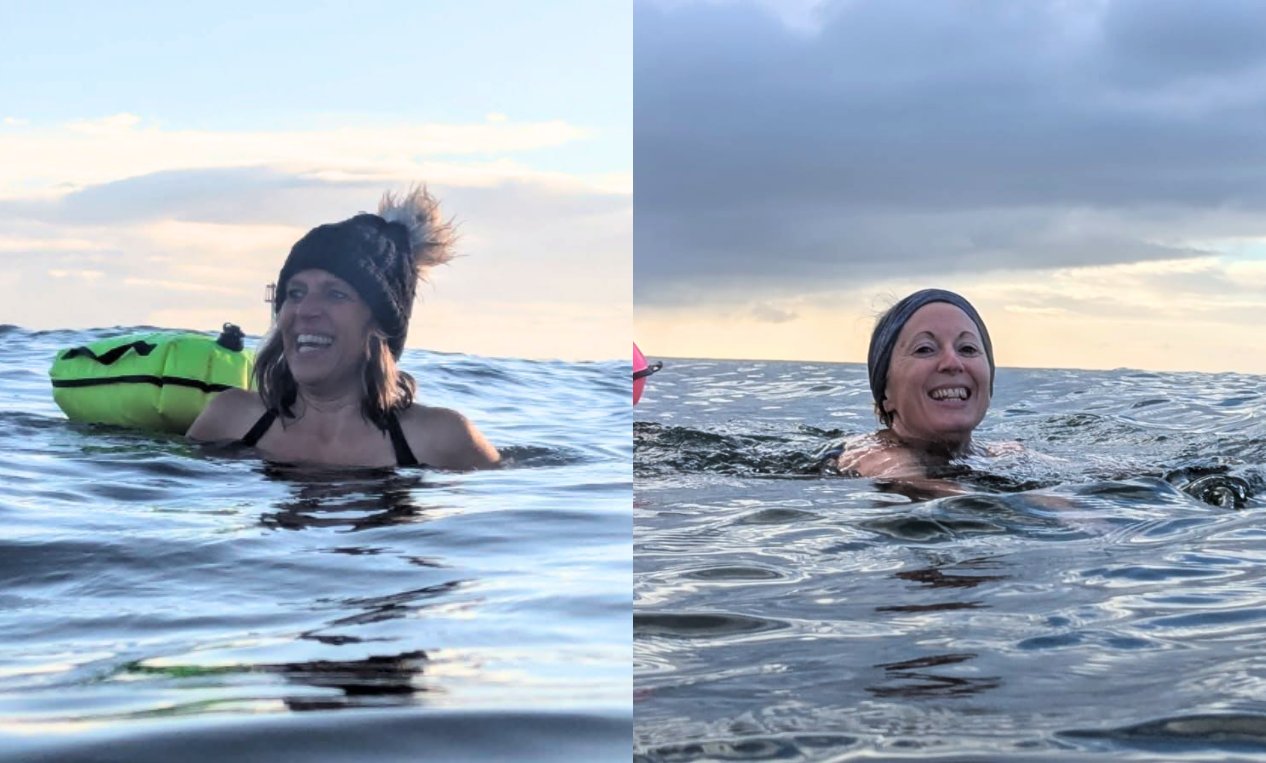
Ocean Swimmers Pik (L) and Carla (R) during their morning dips
Yet even in places like Dawlish Warren, where swimmers describe relatively few pollution alerts, concerns about sewage discharge are growing. In 2023, SWW recorded thousands of releases across the region: storm overflows that send untreated wastewater into rivers and seas during heavy rainfall. Environmental campaigners argue that this practice, while permitted in emergencies, is overused and poorly monitored.
“I can only recollect being aware of a smell once,” Carla adds, “but when you hear about discharges at nearby beaches like Exmouth, it’s totally unacceptable. We all pay so much to South West Water every year… I would hope this money is being spent wisely however, senior executives appear to be reaping benefits in the form of their bonuses rather than sorting out ongoing issues with discharge at beaches, such as Exmouth. It is totally unacceptable and needs to be resolved.”
For Jo, who travels from Exeter to swim at Dawlish Warren, Torre Abbey Sands and Teignmouth, these concerns go back decades. “I’ve been sea swimming since I was a child, fifty years. I remember poo floating in the water while sailing in Plymouth,” she says. “I’m very concerned about sewage discharges. The buck stops with the government and the water companies. There should be more monitoring stations, and [monitoring] should be all year round.”
Jo never swims after heavy rain and checks the Surfers Against Sewage app for alerts shared in her swimming groups. “Sea swimming is so health-promoting,” she says. “Local councils, water companies and the government should be doing more to keep the seas clean… for the marine environment, to keep the ecosystem healthy, to promote biodiversity.”
Fellow swimmer, Pik, agrees. A regular at Dawlish Warren, she describes her group as “a supportive community of adults from around Devon and beyond, all with their own life experiences and wisdom to share.” She swims three to four times a week and checks the SAS app before each dip. “I’ve never seen discharge at Dawlish Warren,” she says, “but I have at Dawlish. There’s a lack of visible responsibility from any agency. How are the government and other bodies keeping people and wildlife safe?”
For these swimmers, the issue isn’t abstract. Clean water is personal. It shapes their health, friendships and sense of belonging. Their message is less about blame than about accountability and stewardship.
“We can all work together,” Carla says. “Every stakeholder needs to understand and take ownership of their responsibility to ensure the safety and wellbeing of sea users and to protect our coast. We need to consult, listen, act and respond.”
As communities like the Aquaholics continue to take to the sea year-round, their voices remind us that wastewater management isn’t just an engineering challenge, it’s a social one. Sustainable water systems depend on trust, transparency, and investment that keeps pace with changing climates and coastal pressures. The question now is whether water companies, regulators, and government can rise to meet that responsibility, ensuring that clean, safe swimming remains part of life along Devon’s coast for generations to come.