
Rethinking Urban Water: The Urgent Shift Towards a Decentralised Future
Aging wastewater management systems are a problem that typically end up out of sight and out of mind. We don’t think about the pipes under our feet – until they fail. Catastrophically. Aged wastewater infrastructure finally reaches well beyond the limit of what it was designed to do, and we end up with urban sinkholes. This is a problem you can observe across several continents. Europe, Asia, North and South America, strained water infrastructure affects us all.
In many cases, this is not simply a maintenance problem, it is a legacy of outdated infrastructure logic colliding with modern realities. Much of today’s wastewater infrastructure was built several decades ago if not a century ago, often in the mid-20th century, for cities that were smaller, less dense, and far less water-intensive than those we inhabit today.
The UK offers a clear example. Large portions of London’s wastewater system date back to the 1960s late nineteenth century, designed around a centralised “combined sewer” model that prioritised moving sewage as far away from populations as possible. Treatment plants were intentionally located near rivers and estuaries, discharging treated effluent downstream and out to sea. At the time, this revolutionary approach played a critical role in preventing waterborne diseases such as cholera and protecting public health.

“Utilitarian” - Jon Doe (sub-urban.com) (flickr.com) CC BY-ND 2.0
London’s Underground Sewage, built in the 1800s
But the assumptions underpinning that model no longer hold. Cities have expanded dramatically, water demand has intensified, and climate-driven rainfall extremes are placing unprecedented pressure on long-distance pipe networks. Wastewater now travels vast distances underground, pumped repeatedly, only to be treated far from where the water, once reclaimed, is needed most.
When these systems fail, the consequences are severe. Sinkholes caused by leaking or collapsing pipes destabilise roads and buildings, disrupt transport networks, and require costly emergency repairs. One of the most dramatic examples occurred in Guadalajara, Mexico, in the early 1990s, where ageing sewer infrastructure combined with industrial leaks led to explosive road collapses beneath city streets. More recently, sinkholes across several prefectures in Japan, along with shifting demographics, are prompting the authorities there to reassess community utility objectives. These incidents serve as a stark reminder that infrastructure failure is sudden, dangerous, and deeply disruptive.
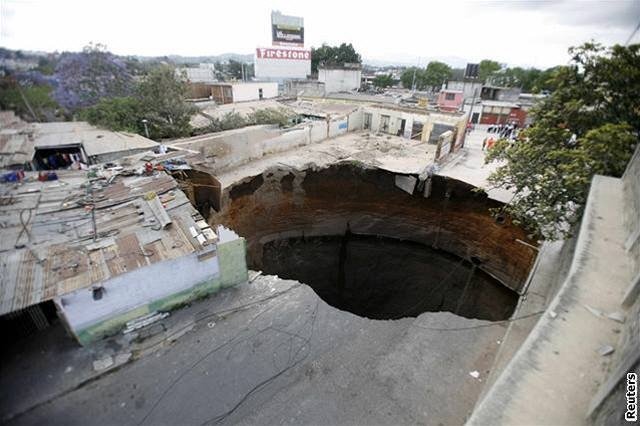
“Guatemala_Sinkhole 2007” by horslips5, CC BY 2.0 (flickr.com)
Similarly, a sinkhole in Guatemala caused by a sewage pipe failure in 2007
Traditional centralised sewer systems rely on extensive buried pipework, much of it now approaching or exceeding its intended lifespan. Cracks, joint failures, and material degradation from saline-intrusion driven corrosion allow wastewater to leak into surrounding soils or groundwater to infiltrate pipes, weakening structural integrity. Heavy rainfall events, such as monsoons, typhoons, or increasingly intense storms fuelled by climate change, accelerate this process, compounding stress on already fragile systems. This is particularly noticeable in the monsoon climates of Asia and South America.
At the same time, centralised infrastructure creates an inefficiency that is often overlooked: water is pumped long distances, twice. First, wastewater is transported away from where it is generated; then, clean or potable water is pumped back toward urban centres to meet demand. As cities grow and energy costs rise, this model becomes increasingly unsustainable.
Decentralised wastewater systems challenge the status quo. Rather than transporting all wastewater to distant treatment plants, decentralised systems treat water locally: at the scale of a building, campus, district, or community. This significantly reduces the length and depth of underground pipe networks, easing asset management and lowering the risk of leaks, subsidence, and catastrophic failure.
Crucially, decentralised systems also bring treatment closer to demand. Reused water can be supplied directly where it is needed for cooling, district heating, irrigation, toilet flushing, cleaning, or industrial processes, without the energy-intensive pumping required by centralised systems. This makes decentralised treatment not only more resilient, but far more energy efficient.
Another key advantage lies in flexibility. Centralised plants are typically designed to treat all wastewater to a single standard, regardless of end use. Decentralised systems allow water to be treated to fit-for-purpose quality levels, tailored to local needs. For example, industrial water being reused for irrigation, toilet flushing, or cooling. The vast majority of water demand is for non-potable use; treating water only to the standard required locally reduces energy use, chemical inputs, and operational costs.
One sector that would heavily benefit from this is the digital infrastructure sector. Data centres, already under scrutiny for their energy consumption, are now facing public pressure over their water footprints. Many data centres rely on large volumes of water for cooling, yet centralised systems are not designed to supply this demand sustainably. Decentralised treatment and reuse offer a clear path forward: capturing wastewater on site, treating it, and recirculating it for cooling can significantly reduce demand on municipal supply, stormwater networks, and aquifers.
Importantly, decentralised systems require processes that are even affordable at smaller scales. They must be easily deployable, modular systems, scalable to match urban growth, and adapted to specific site conditions: from hospitals and hotels to universities, industrial parks, and data centres. This distributed approach enables better water management within defined areas, rather than forcing every drop through a single, overstretched network.
ALGAESYS’ nature-based treatment systems align closely with this emerging paradigm. By using photosynthetic organisms to process wastewater in a low footprint, high rate configuration, our technology offers a low-energy, low-impact, water positive alternative that can operate independently of long-distance sewer infrastructure. This reduces reliance on ageing underground assets, supports local water reuse, and strengthens resilience against climate-driven extremes.
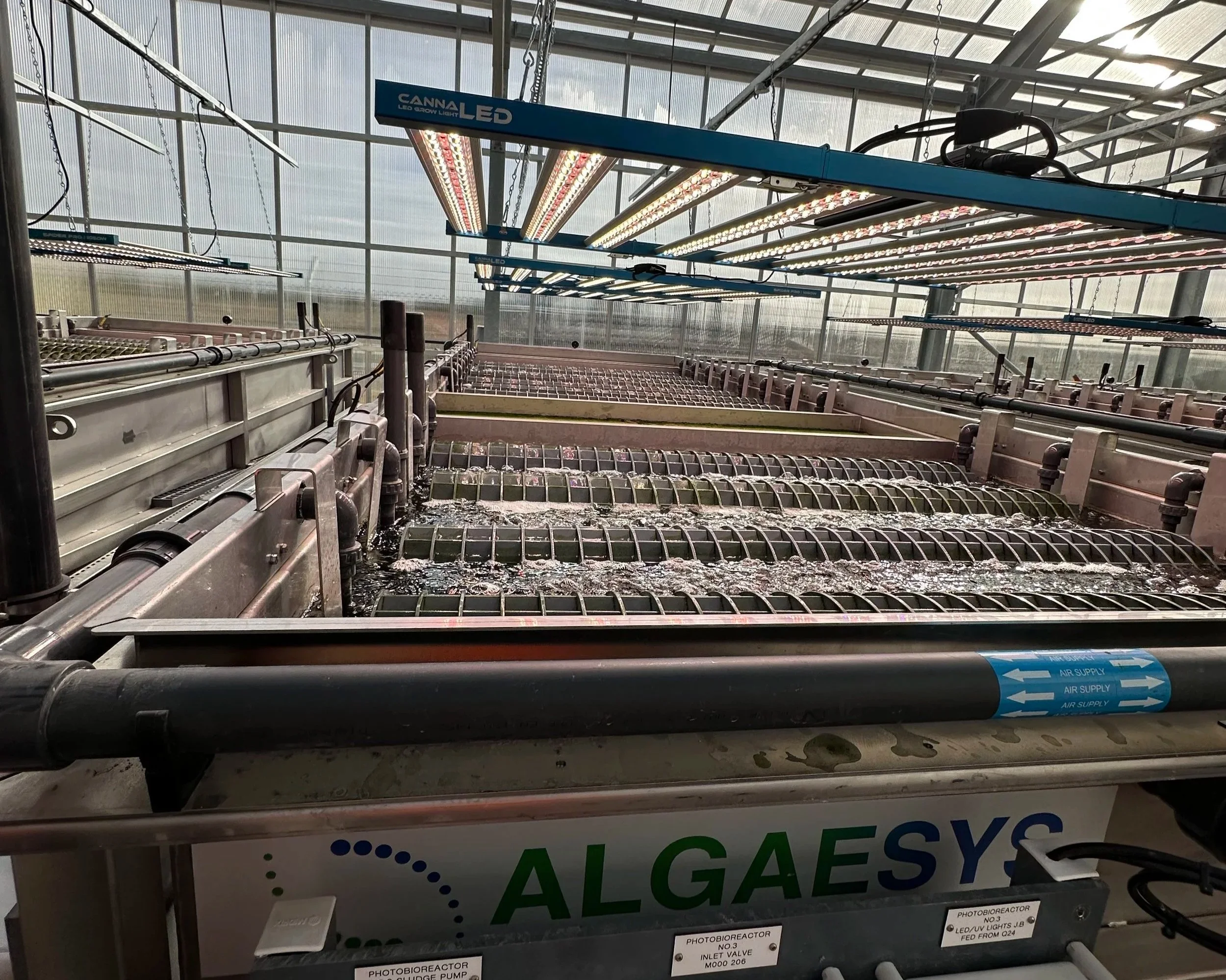
ALGAESYS - a decentralised, sustainable solution that fits in a simple greenhouse
Sinkholes may be the most visible warning sign, but they are only one symptom of a deeper global challenge. As cities worldwide confront the limits of centralised wastewater infrastructure, decentralised systems offer a future-ready alternative. One that reduces risk, improves efficiency, enables water reuse, and treats water as the valuable resource it truly is.
With decentralised, algae-based treatment, with attractive returns on investment, ALGAESYS is helping create safer, more adaptive cities, where water is managed as a resource, not a liability beneath our streets.